The Hidden Cost of a Traditional Fireplace: Why It’s Time to Upgrade
- Home
- Wood Stoves
- The Hidden Cost of a Traditional Fireplace: Why It’s Time to Upgrade
There is nothing quite like the crackle of an open fireplace on a snowy Pennsylvania evening. But for many homeowners in Delaware County and the Main Line, that cozy image comes with a frustrating reality: the closer you sit to the fire, the colder the rest of the house feels.
It’s a classic heating paradox. While a traditional masonry fireplace offers unmatched ambiance, it is often a “heat vacuum.” According to the Department of Energy, an open-hearth fireplace can exhaust as much as 300 cubic feet of heated indoor air every minute, effectively sucking the warmth out of your home and sending it straight up the chimney.
If you are tired of watching your heating bills climb while your living room remains drafty, converting your existing fireplace to a wood stove insert is the most effective solution. This isn’t just a cosmetic renovation; it’s a high-performance engineering upgrade. By retrofitting a precision-crafted unit, like a Vermont Castings insert, into your current firebox, you transform an inefficient architectural feature into a powerful, EPA-certified heating plant.
In this guide, we’ll break down the technical and financial benefits of making the switch, from dramatic increases in fuel efficiency to the essential safety role of a professional stainless steel chimney liner.
Efficiency: From 10% to 75%+ Heat Recovery
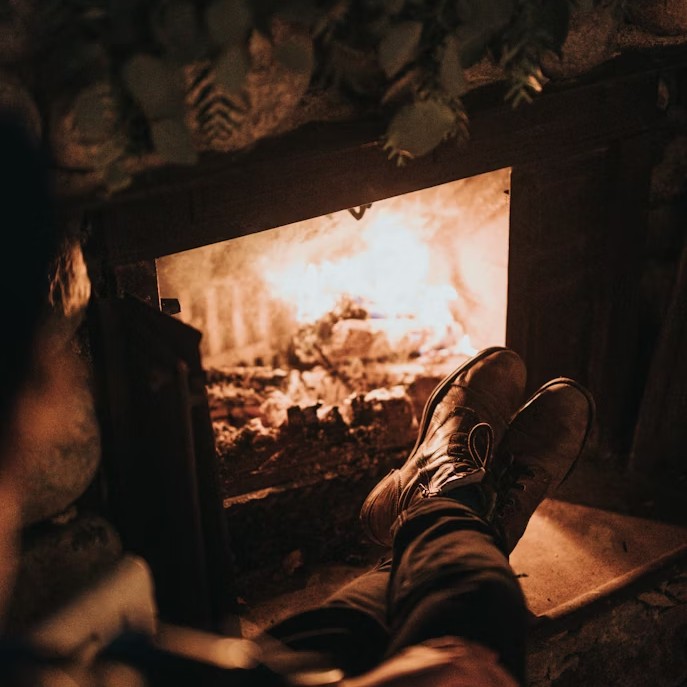
The biggest shock for most homeowners is learning just how inefficient a standard masonry fireplace truly is. In terms of thermal performance, an open fire is roughly 10% to 15% efficient. This means for every ten logs you burn, nine of them are effectively heating the outdoors, not your family.
The “Stack Effect” and Heat Loss
An open fireplace works through natural convection, but it’s an uncontrolled process. To keep a fire burning, the chimney draws massive amounts of oxygen from the room. As that hot air rises, it creates a vacuum—the stack effect—which pulls cold air in through your home’s windows, doors, and floorboards to compensate. You might feel “toasty” right in front of the grate, but the rest of your house is actually getting colder.
How a Wood Stove Insert Changes the Physics
A wood stove insert solves this by creating a “closed combustion” system. Here is how the technology works to keep you warmer:
Controlled Airflow: Unlike an open hearth, an insert is airtight. You control exactly how much oxygen the fire receives using precision dampers, allowing for a slower, hotter, and more complete burn.
Convection Chambers: High-quality inserts are designed with a “firebox within a firebox.” Cool room air is drawn into a secondary chamber, heated against the hot metal of the stove, and then circulated back into your home.
Variable-Speed Blowers: Most modern installs include a quiet blower system that forces that trapped heat out into the room, ensuring the warmth travels further than just the hearth rug.
Secondary Combustion: High-efficiency inserts actually re-burn the smoke and gasses produced by the wood. This process, known as secondary combustion, extracts more heat from the same amount of fuel while significantly reducing emissions.
The Bottom Line: Longer Burn Times
Because of this efficiency, you aren’t just getting more heat; you’re getting longer heat. While an open fire might burn out in an hour without attention, an EPA-certified insert can provide a steady, “overnight” burn for 6 to 10 hours on a single load of seasoned hardwood.
Pro Tip
Efficiency isn't just about the stove; it's about the fuel. To hit that 75% efficiency rating, always use seasoned wood with a moisture content below 20%. Burning 'green' wood forces the stove to spend energy boiling off water rather than heating your home.
Real-World Savings: Why a Wood Stove is an Investment
In the current 2026 energy market, heating a home in Greater Philadelphia can be a significant line item in your monthly budget. Converting to a wood stove insert allows you to shift from “Central Heating” to “Zone Heating.”
Slash Your Primary Fuel Usage: By using a insert to heat the “heart of the home” (the kitchen and living areas), you can turn your thermostat down by 5–10 degrees throughout the rest of the house. This significantly reduces the consumption of expensive heating oil, propane, or electricity.
Fuel Economy: Because an insert is an airtight, controlled combustion chamber, you get more BTUs out of every piece of wood. You’ll find yourself buying or splitting half the amount of wood you previously used for an open fire.
Property Value: High-efficiency wood inserts are a sought-after feature for Delco homebuyers who value both the “Main Line” aesthetic and modern energy independence.
Aesthetics: A Modern Upgrade for Your Historic Hearth
Many homeowners worry that adding an insert will ruin the classic look of their masonry fireplace. In reality, a professional insert installation provides a “face-lift” for your living room while maintaining the soul of the home.
Furniture-Grade Craftsmanship: Modern inserts are designed to be focal points. Whether your home is a century-old stone estate or a more contemporary build, you can choose from various cast iron or heavy-gauge steel finishes that complement your existing mantel and décor.
The “Clean Glass” Experience: One of the best features of a modern insert is the ceramic glass door. Integrated “Airwash” systems use a curtain of high-velocity air to keep soot and ash off the glass, providing a crystal-clear view of the fire that stays cleaner far longer than an open hearth.
Clutter-Free Heating: An insert contains the ash and wood debris within a sealed chamber. This means fewer sparks on the rug, less dust in the air, and a much cleaner surrounding hearth area compared to a traditional wood grate.
Make the Switch for a Warmer Winter
Upgrading your fireplace is more than just a home improvement project; it’s a commitment to efficiency, safety, and long-term comfort. By moving away from an inefficient open hearth and toward a precision-engineered wood stove insert, you’re turning a “drafty hole in the wall” into a reliable, high-output heating source.
Don’t spend another winter shivering in front of a drafty fireplace. At Jim Murray’s Chimney Service, we specialize in matching the right high-efficiency insert to your specific home and heating needs. From the initial measurement to the final inspection, our team ensures your installation meets the highest safety standards for homes across Delaware County and the Main Line.
Contact us today to schedule your hearth evaluation and discover how a professional insert installation can transform your home this season. Don’t wait – call 610-626-6631 now.