
A Chimney Repair in Delaware County: See The Before and After
- Home
- Chimney Repair
- A Chimney Repair in Delaware County: See The Before and After
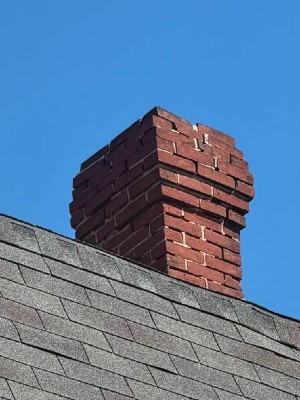
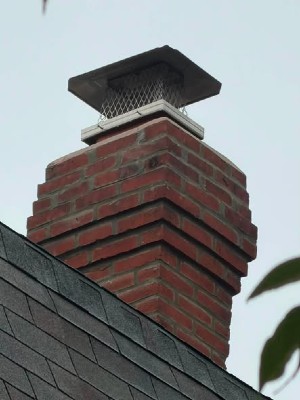
This chimney repair in Delaware County, PA involved a combination of rebuilding and repointing, along with a new top tile, crown wash, waterproofing, and a stainless steel cap. In the photos below, you can see the condition of the mortar before the work and how the chimney looked when we finished.
If your own chimney is showing wear, you may be wondering how much work it needs. Can the mortar be repaired, or will some of the brickwork need to come down? This project included both types of repair, so it’s a useful example of how they differ and why they may be used together.
Before
After
Repairing the Brickwork
This chimney needed both rebuilding and repointing. You can see some of the deterioration in the before photo, where mortar is missing from the joints between the bricks.
Repointing allows us to repair those joints where the existing brickwork is still in good condition. The deteriorated mortar is removed, and the joints are filled with new mortar that’s compatible with the masonry. There’s preparation involved here; putting fresh mortar over a worn joint leaves the failing material underneath.
Where bricks are damaged or the masonry is no longer stable, a section may need to be taken down and rebuilt. The condition of the chimney determines how much work is necessary. Missing mortar alone doesn’t mean the whole thing has to come down.
For this project, we completed the masonry repairs while keeping the chimney’s stepped brick design, which you can see in the finished photo.
A New Top Tile, Crown Wash, and Chimney Cap
We also installed a new top tile, crown wash and stainless steel cap. These names may not mean much until you’re looking at a repair estimate, so it helps to know where each piece goes.
The top tile is the uppermost section of the tile lining inside the chimney. The crown wash covers the masonry around that tile, helping water drain off the top. Above the opening sits the stainless steel cap, with a cover to help keep rain out and mesh sides to help keep animals from getting in.
The cap and crown wash are easy to confuse. From the ground, you’ll probably notice the metal cap first, but the surface around it needs to shed water, too. Installing a cap leaves that surrounding masonry exposed, which is why its condition also matters.
Waterproofing the Chimney
Waterproofing was also part of this job. Brick and mortar can absorb moisture, and a suitable water-repellent treatment helps reduce that absorption while allowing moisture vapor to escape.
It’s useful protection, but it has limits. Applying a treatment over missing mortar or damaged brick won’t repair the masonry underneath. Those open joints in the before photo needed actual repair work. If you’re considering waterproofing your chimney, have its condition checked first so you know whether repairs are needed as well.
When to Have Your Chimney Checked
If you notice gaps in the mortar, pieces of brick or mortar collecting below the chimney, or brickwork that looks out of place, it’s worth having someone take a look. Take a photo from the ground if you can get a clear view; there’s no need to get onto the roof yourself.
Don’t worry about knowing which repair to ask for. Tell us what you’ve noticed, and we can examine the chimney and explain what needs attention. A photo can help start that conversation, but it won’t show everything we need to assess.
For chimney repairs in Delaware County, PA, contact Jim Murray’s Chimney Service to schedule a visit.
Frequently Asked questions
Can my chimney be repointed, or does it need to be rebuilt?
If the bricks and underlying masonry are sound, repointing may be enough to repair deteriorated mortar joints. Damaged or unstable areas may need rebuilding. Both repairs can be used on the same chimney, as they were on this project.
Can waterproofing fix missing mortar?
No. Missing mortar needs to be replaced, and loose or damaged masonry needs to be repaired. A waterproofing treatment helps reduce water absorption; it won’t close those gaps or hold the bricks in place.
Do I still need a cap if my chimney crown has been repaired?
A repaired crown leaves the flue opening uncovered. The cap sits over that opening to help keep out rain and animals, while the crown protects the surrounding masonry. They do different jobs.
Is replacing the top tile the same as relining the chimney?
No. Replacing the top tile addresses the uppermost section of a tile-lined flue. It doesn’t replace the lining farther down. If your estimate includes a top tile, you can ask about the condition of the remaining liner and whether it needs any work.